Book Appointment Now

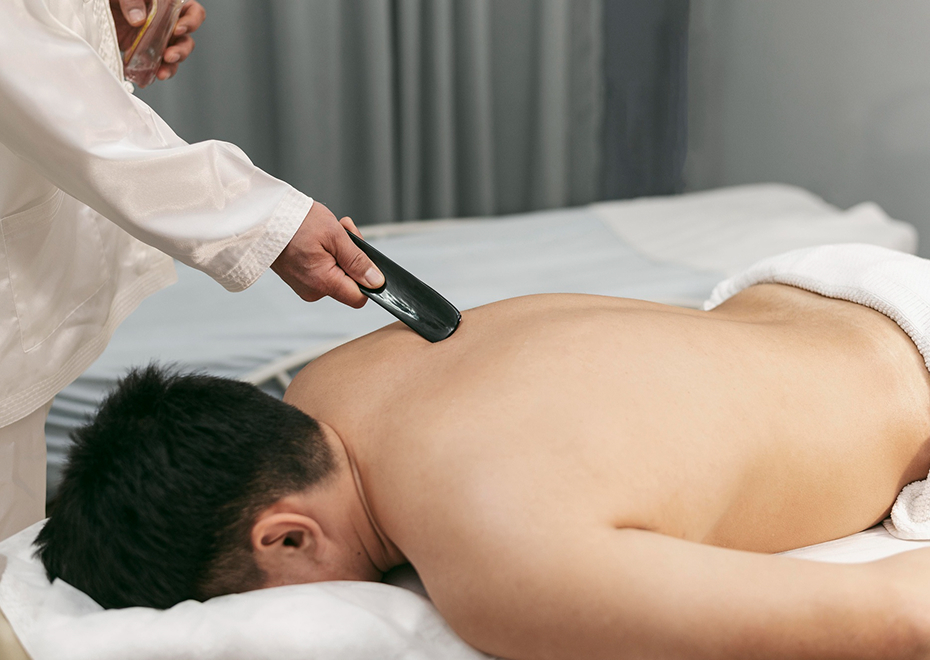
Instrument-Assisted Soft Tissue Therapy for Scar Tissue & Muscle Restrictions
Graston Technique in Edmonton
At Millwoods Physical Therapy Centre, our registered physiotherapists use the Graston Technique — a form of instrument-assisted manual therapy — to work with soft tissue restrictions, scar tissue, and areas of chronic muscle tightness. Using specialized stainless steel instruments, your physiotherapist can identify and address restricted tissue as part of a broader treatment plan aimed at supporting mobility and function.
0
Years
Providing Physiotherapy Services Edmonton
0
Registered Physiotherapist
on Staff
0
Patients Treated
at Millwoods Physical therapy Center
What is the Graston Technique?
The Graston Technique is a form of instrument-assisted manual therapy that uses stainless steel instruments to detect and work with soft tissue restrictions. It’s designed to address scar tissue and fascial restrictions, support the tissue’s natural repair process, and assist in restoring mobility to the affected area. It’s used by trained physiotherapists to address musculoskeletal conditions, particularly those involving muscle, tendon, and ligament injuries, and is typically included as one part of a broader physiotherapy treatment plan rather than a standalone treatment.
Tendinitis
Support for inflamed or irritated tendons through instrument-assisted work on the surrounding soft tissue.
Carpal Tunnel Syndrome
May be used alongside other treatment approaches to address soft tissue restriction contributing to wrist and hand symptoms.
Plantar Fasciitis
Directed at soft tissue restriction in the plantar fascia and surrounding structures.
Frozen Shoulder (Adhesive Capsulitis)
Support for restricted shoulder mobility associated with capsular tightening.
Muscle Strains
Addressing soft tissue restriction and scar tissue formation following a muscle strain.
Tennis Elbow & Golfer’s Elbow
Support for tendon irritation at the elbow associated with repetitive gripping or wrist movement.
Shin Splints
Support for repetitive-stress related lower leg discomfort.
Scar Tissue from Surgery or Injury
Directed at areas of scar tissue that may be restricting movement or contributing to discomfort.

How the Graston Technique May Help
Depending on the condition being addressed, the Graston Technique may support:
- Tissue Response: Directed at stimulating blood flow and supporting the body’s tissue repair process.
- Reduced Restriction: Working with scar tissue and adhesions that may be contributing to tightness or discomfort in the affected area.
- Mobility Support: Addressing fascial restrictions and tightness with the goal of supporting a more typical range of motion.
- Non-Surgical Option: A non-invasive, instrument-assisted approach that doesn’t involve incisions or a surgical recovery period.
Individual response to the Graston Technique varies based on the condition, how established the restriction is, and how your tissue responds over the course of treatment.
Patient Experiences & Recovery Stories
Your recovery journey is our top priority. Discover how our personalized, hands-on treatment plans have supported our patients through chronic pain management, sports injury rehabilitation, and improving daily mobility.vibrant, pain-free life.
Christina Scriba
5.0
All of the staff at Millwoods Physical Therapy Centre are terrific. Right from the very beginning, you are greeted with warmth and kindness. All of the staff are very friendly and courteous. Always happy to help you no matter what you need.
Kulbir Dhillon
5.0
I had a great experience! Rajni Sharma was professional, welcoming, and made me feel comfortable from the moment I arrived. She really took the time to address my problem areas and tailored the treatment to what I needed.
Hajar Ghalab
5.0
I cannot say enough good things about Millwood Physical Therapy Center! The staff is absolutely fantastic, and they create an incredibly calm, grounding environment from the moment you walk in.
Frequently Asked Questions About the Graston Technique
Find answers to common questions about Graston Technique therapy at Millwoods Physical Therapy Centre—including how it differs from massage, potential side effects, session expectations, and insurance coverage.
How is the Graston Technique different from regular massage?
While both involve hands-on work with soft tissue, the Graston Technique uses specialized stainless steel instruments rather than hands alone. The instruments allow a physiotherapist to detect areas of restriction more precisely and apply targeted pressure to specific problem areas.
Does the Graston Technique leave bruising?
Some mild bruising or redness in the treated area is a common response, particularly in areas with significant tissue restriction. This is generally temporary and your physiotherapist can advise on what to expect based on your specific treatment area.
How many Graston Technique sessions will I need?
This depends on the condition being treated, how established the restriction is, and individual response to treatment. Your physiotherapist will discuss an approach specific to your situation after your initial assessment.
How many sessions will I need?
The number of sessions varies depending on your condition, its severity, and how your body responds to treatment. Some patients see significant improvement in 3 to 4 sessions, while others with chronic conditions may benefit from ongoing care.
Is the Graston Technique covered by insurance in Alberta?
The Graston Technique is typically billed as part of a physiotherapy treatment session, and many extended health plans include coverage for physiotherapy. We recommend checking with your provider for details specific to your plan.
Can the Graston Technique be combined with other treatments?
Yes. It’s commonly used alongside manual therapy, exercise-based rehabilitation, or other techniques such as dry needling or shockwave therapy, as part of a broader treatment plan.
Is the Graston Technique suitable for everyone?
It isn’t appropriate for every condition — for example, it’s generally avoided over areas with active infection, open wounds, certain vascular conditions, or unhealed fractures. Your physiotherapist reviews your health history during your assessment to confirm it’s a suitable option for you.
Will I feel results right away?
Response to treatment varies by individual and condition. Some people notice a difference within a few sessions, while others require a longer course of treatment depending on how established the restriction is. Your physiotherapist can discuss what to reasonably expect based on your specific situation.
Direct Billing is available for most insurance companies
We offer direct billing to most major insurance providers to simplify the process for our patients.