Chiropractor vs. Physiotherapy: What’s the Difference and Which Is Right for You?

Neck Pain During Pregnancy: What Its, Who Gets it, and Why it Happens
Neck pain during pregnancy is common and usually relates to posture changes, breast and belly growth, muscle fatigue, and increased joint and tissue flexibility. It can show up as a stiff neck, headaches that start at the base of the skull, shoulder tightness, or pain between the shoulder blades.
How common is neck pain during pregnancy? About 1 in 5 women experience it.
This matters most in the second and third trimesters, when body shape changes accelerate and sleep becomes harder. Symptoms often increase with desk work, looking down at a phone, side-sleeping with poor pillow support, and carrying older children.
Physiotherapy can help by identifying your specific drivers (posture, mobility limits, muscle weakness, nerve sensitivity, or jaw and upper back factors) and building a safe plan for pregnancy.
In this blog, find out why women experience neck pain during pregnancy, and how you can relieve it.
Most common causes of neck pain during pregnancy (and what they feel like)
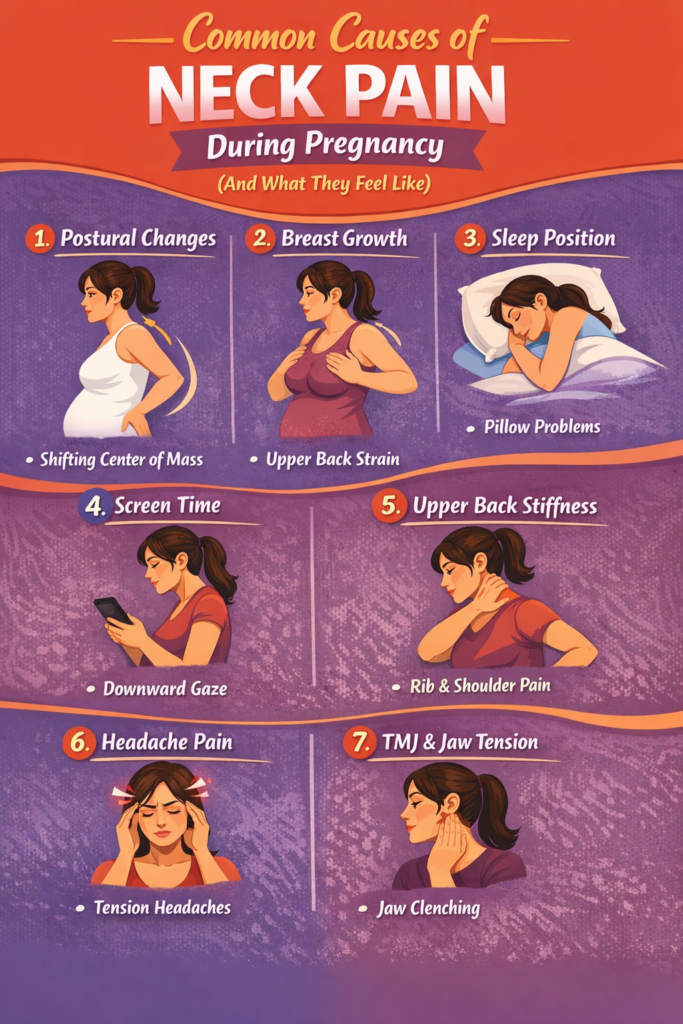
1) Postural changes from a changing center of mass
As the belly grows, the rib cage position and upper back mechanics often change, and the head may drift forward. This can overload the neck extensor muscles and upper trapezius.
2) Breast growth and upper back strain
Increased breast size can increase load on the upper back and neck, especially if bra support is limited. This often feels like aching across the tops of the shoulders and a heavy, tight neck.
3) Sleep position and pillow mismatch
Side-sleeping is common in pregnancy, but a pillow that is too high or too flat can bend the neck for hours. This often causes morning stiffness and pain that eases as you move.
4) Screen time and “downward gaze” habits
Phones, tablets, and reading in bed increase sustained neck flexion. This often feels like a burning, tired pain at the base of the neck.
5) Upper back and rib stiffness
Limited mid-back mobility can force the neck to move more to compensate. This often comes with pain between the shoulder blades or difficulty turning your head while driving.
6) Headache-related neck pain
Tension-type headaches and cervicogenic headaches often link to neck and upper back muscle irritation. This can present as head pain that starts in the neck and wraps to the temples or behind the eyes.
7) Jaw (TMJ) tension contributing to neck symptoms
Jaw clenching, tooth grinding, or TMJ irritation can increase neck muscle tone. This may feel like neck tightness with jaw soreness, clicking, or facial tension.
Quick self-check: is it likely muscular, joint-related, or nerve-related?
Use these patterns to describe symptoms clearly to your provider.
| Pattern | Common description | Often aggravated by | Often eased by |
| Muscular overload | Tight, sore, tired, burning | Long sitting, carrying, looking down | Heat, gentle movement, posture breaks |
| Joint irritation | Sharp with certain turns, “stuck” feeling | Quick head turns, sustained posture | Small frequent movements, gentle mobility |
| Nerve sensitivity | Tingling, numbness, radiating pain | Prolonged positions, certain neck angles | Changing positions, unloading arm, guided exercises |
Safe, practical relief strategies you can start today
Posture breaks that actually reduce load
Set a timer for every 30 to 45 minutes. Stand up and do 30 to 60 seconds of gentle movement to change tissue loading.
Use this quick sequence:
- Roll shoulders up, back, and down 5 times
- Turn head right and left within a comfortable range 5 times each
- Reach arms overhead and take 3 slow breaths
Heat and cold: which to choose
Heat is often better for muscular tightness and morning stiffness. Cold can help if the area feels inflamed or sharply irritated after activity.
Use a simple rule:
- Use heat for 10 to 15 minutes for stiffness or tightness
- Use cold for 8 to 12 minutes for sharp or “hot” pain after activity
- Stop if symptoms worsen during or after
Phone and laptop changes that reduce neck strain
Small setup changes often create large symptom changes within 1 to 2 weeks.
Prioritize these adjustments:
- Raise screens so your eyes look straight ahead
- Use a chair back support so ribs stack over pelvis
- Keep elbows supported to reduce shoulder tension
- Use voice-to-text when symptoms flare
Supportive bra fit can matter
A well-fitting, supportive bra can reduce upper back and neck muscle workload. If straps dig in or you feel shoulder “grooves,” consider a refit.
| Find a Convenient Appointment Time Start treating your neck pain as early as today! [Book Online] |
Pregnancy-safe exercises for neck pain (low risk, high payoff)
Do these 4 to 6 days per week. Keep intensity at a 2 to 3 out of 10 discomfort level.
1) Chin nods (deep neck flexor activation)
This targets the small stabilizers that help reduce forward-head strain.
- Lie on your side with your head supported, or sit tall
- Gently nod as if saying “yes” without tucking hard
- Hold 3 seconds
- Do 8 to 12 reps, 1 to 2 sets
2) Scapular retractions (upper back support)
This helps unload the neck by improving shoulder blade control.
- Sit or stand tall
- Draw shoulder blades slightly back and down
- Hold 3 seconds
- Do 10 reps, 2 sets
3) Thoracic rotation (mid-back mobility)
This can reduce compensations in the neck.
- Sit tall with arms crossed
- Rotate gently right, then left
- Pause 1 second each side
- Do 6 to 10 reps per side
4) Upper trapezius stretch (gentle version)
This can calm the “top of shoulder” tension pattern.
- Sit tall and hold the chair seat with your right hand
- Tip left ear toward left shoulder gently
- Hold 20 to 30 seconds
- Repeat on both sides, 1 to 2 rounds
Stop and get assessed if any exercise produces tingling, numbness, dizziness, or increasing radiating pain.
Sleeping with neck pain during pregnancy: pillow and positioning fixes
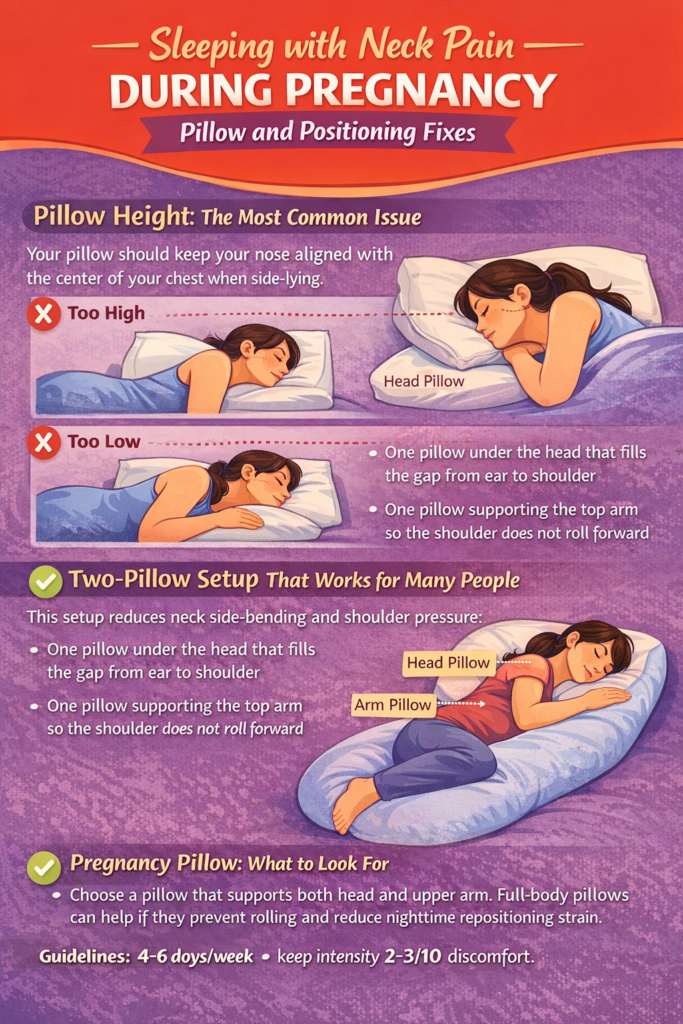
Pillow height: the most common issue
Your pillow should keep your nose aligned with the center of your chest when side-lying. Too high bends the neck away from the mattress. Too low bends it toward the mattress.
Two-pillow setup that works for many people
This setup reduces neck side-bending and shoulder pressure:
- One pillow under the head that fills the gap from ear to shoulder
- One pillow supporting the top arm so the shoulder does not roll forward
Pregnancy pillow: what to look for
Choose a pillow that supports both head and upper arm. Full-body pillows can help if they prevent rolling and reduce nighttime repositioning strain.
When neck pain in pregnancy needs assessment sooner
Book an in-person assessment sooner if you notice any of the following:
- Numbness, tingling, or weakness in the arm or hand
- Pain traveling below the elbow that is increasing
- Severe headaches that are new for you or escalating
- Dizziness, visual changes, or unsteadiness linked to neck movement
- Night pain that is steadily worsening or not changing with position
Prompt assessment helps identify whether the driver is mechanical strain, nerve sensitivity, jaw involvement, or another contributing factor.
How physiotherapy can help neck pain during pregnancy (what care may include)
Physiotherapy for pregnancy-related neck pain is typically focused on reducing irritation, improving movement options, and building strength that supports posture as your body changes.
Care may include:
- A one-on-one assessment of neck, upper back, shoulder, and breathing mechanics
- Hands-on treatment to address stiff joints and overloaded muscles as appropriate
- Individualized exercise progressions matched to trimester, symptoms, and tolerance
- Ergonomic and sleep-position coaching that fits your daily life
- Guidance on pacing and flare-up management so symptoms do not spiral
If jaw tension or headaches are part of the picture, treatment may also consider TMJ and upper cervical contributors.
AHS-funded physiotherapy: who may qualify and how it helps access care
Some patients may be eligible for physiotherapy coverage through Alberta Health Services funding. Eligibility depends on program criteria and referral pathways.
If you are pregnant and trying to access funded care, a clinic can help you understand:
- Whether you meet current eligibility criteria
- What documentation may be needed
- How to book into the appropriate appointment type
FAQ: neck pain during pregnancy
Is neck pain normal in the first trimester?
It can be. Early pregnancy fatigue, nausea-related posture changes, and new sleep patterns can increase neck and shoulder tension even before visible body changes occur.
Can pregnancy hormones cause neck pain?
Increased tissue flexibility can change how joints and muscles share load. The most common result is that posture and endurance matter more, so the neck and upper back can fatigue faster.
What if my neck pain triggers headaches?
Headaches linked to neck stiffness often respond to improving upper back mobility, reducing sustained posture, and building neck and shoulder blade endurance. If headaches are new, severe, or rapidly worsening, get assessed promptly.
Can I get a massage for neck pain while pregnant?
Many people find massage helpful for short-term symptom relief. It works best when combined with exercise and positioning changes that reduce repeated overload.
How long should it take for neck pain to improve?
If the main drivers are posture and muscle overload, many people notice early improvement within 1 to 2 weeks after making consistent setup and exercise changes. Persistent symptoms may need a tailored plan.
Book a pregnancy-safe neck pain assessment in Edmonton
If neck pain is affecting your sleep, work, or daily comfort, Millwoods Physical Therapy Centre offers personalized, one-on-one physiotherapy care in a welcoming clinic environment. We are conveniently located on 23rd Ave NW in Edmonton, with direct billing and weekend appointments available.
Millwoods Physical Therapy Centre is rated 4.9 stars by 150+ Google reviews, and our team includes 4 registered physiotherapy and massage therapy providers. Call or book online to get a plan tailored to your trimester, symptoms, and goals.