Book Appointment Now


Chiropractor vs. Physiotherapy: What’s the Difference and Which Is Right for You?
When you’re dealing with pain, injury, or limited mobility, finding the right provider can make a measurable difference in your recovery. Chiropractors and physiotherapists are two trusted professionals in musculoskeletal and movement health but their qualifications, treatment styles, and clinical approaches are not the same.
In this guide, you’ll learn:
- The primary differences between chiropractic care and physiotherapy
- The kinds of conditions each provider typically treats
- Practical factors to help you choose the right care for your needs
- How Millwoods Physical Therapy Centre supports patient-centered rehabilitation
Recent data from the Canadian Institutes of Health Research shows that over 11 million Canadians experience chronic musculoskeletal pain, highlighting the need for effective, specialized care options. Understanding your choices can help maximize your recovery and comfort.
What Is Chiropractic Care?
Chiropractors are regulated healthcare professionals trained to assess, diagnose, and manage musculoskeletal concerns involving the spine, joints, and nervous system. The central focus is identifying and addressing spinal misalignments and joint mechanics.
Chiropractor—Key Facts:
- Primary focus is spinal and joint health, especially spinal alignment
- Techniques center on spinal manipulation (“adjustments”), joint mobilization, and soft-tissue work
- Commonly treats acute or chronic back pain, neck pain, headaches, and joint dysfunction
- Extensive manual therapy training, typically with short, repeat visits
- May recommend ongoing appointments for maintenance or preventive care
As [Name, Designation] at Millwoods Physical Therapy Centre, notes:
“Chiropractic adjustments can be valuable for managing sudden joint pain or restoring mobility when other treatments have not brought relief.”
What Is Physiotherapy?
Physiotherapists are university-educated professionals skilled in assessing, diagnosing, and treating pain and movement disorders stemming from injury, illness, or surgery. At Millwoods Physical Therapy Centre, physiotherapists provide tailored, evidence-based plans using hands-on techniques, exercise programming, and education.
Physiotherapy—Key Facts:
- Addresses musculoskeletal, neurological, and cardiorespiratory conditions (not just the spine)
- Combines manual therapy, movement analysis, exercise prescription, and patient education
- Supports recovery from chronic pain, surgery, concussion, TMJ dysfunction, pelvic health concerns, vertigo, and sports injuries
- Focuses on personalized, goal-based rehabilitation plans
- Encourages patient involvement and self-management strategies
Comparing Chiropractic and Physiotherapy: Treatment Approaches
| Attribute | Chiropractic Care | Physiotherapy |
| Main Focus | Spine and joint alignment | Movement, function, rehabilitation |
| Typical Methods | Spinal manipulation, manual therapy | Manual therapy, individualized exercise, patient education |
| Session Style | Usually short, repeat visits | Often longer, one-on-one sessions |
| Conditions Treated | Back/neck pain, joint pain, headaches | Musculoskeletal, post-op rehab, neurological (concussion, vertigo), TMJ, pelvic health, chronic pain, sports injuries |
| Self-Management | Limited emphasis | Strong focus |
Recent research suggests that patients who participate actively in physiotherapy tend to see longer-term benefits. One review shows regular therapy reduces the risk of recurrent low back pain by up to 45%.
When to Choose Physiotherapy
You may benefit from physiotherapy if you:
- Are recovering after surgery, an injury, or a motor vehicle accident
- Experience chronic pain, recurring injuries, or persistent movement problems
- Need specialized care for concussion, pelvic health, TMJ dysfunction, or vertigo
- Want an active role in your recovery, including tailored exercise and education
- Qualify for Alberta Health Services (AHS)-funded rehabilitation
Physiotherapy is typically recommended for comprehensive assessments and conditions that affect function beyond the spine and joints.
When to Consider Chiropractic Care
Chiropractic treatment may be appropriate if you:
- Experience sudden acute or ongoing spine or joint pain (including back, neck, or certain headaches)
- Prefer a treatment approach focused on spinal manipulation
- Are seeking relief for joint dysfunction not resulting from recent surgery or medical conditions
- Are looking for manual adjustments as part of your ongoing care strategy
Chiropractors are often consulted for symptom relief related to spinal alignment and mechanical joint pain.
Key Differences: Chiropractor vs. Physiotherapist
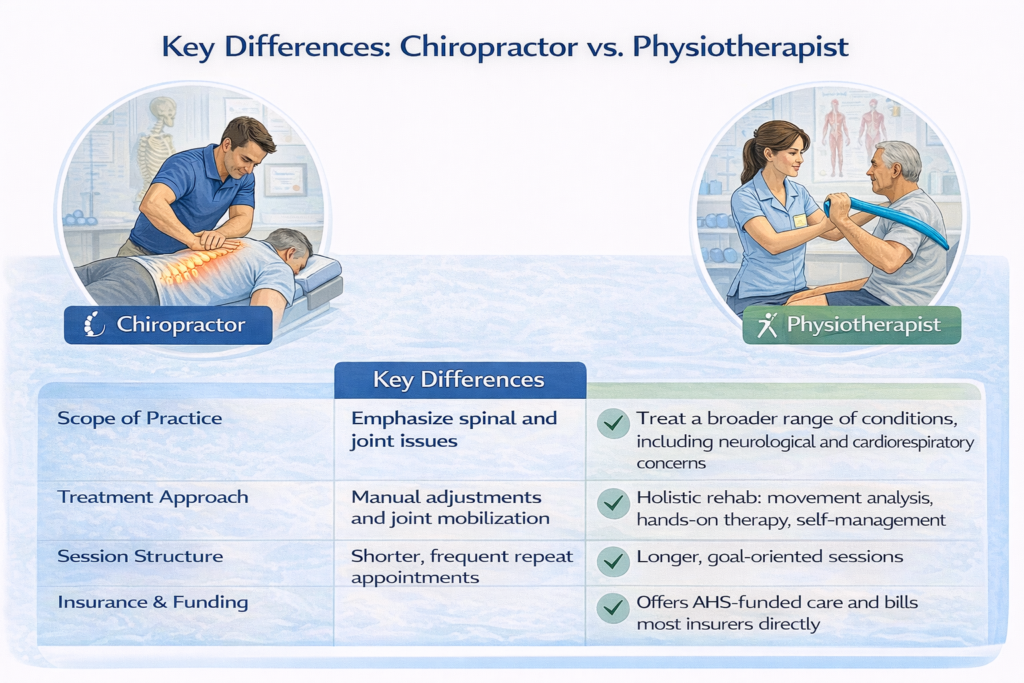
- Scope of Practice:
Physiotherapists treat a broader range of conditions, including many neurological and cardiorespiratory concerns. Chiropractors emphasize spinal and joint issues. - Treatment Approach:
Physiotherapy focuses on holistic, personalized rehab—emphasizing movement analysis, hands-on therapy, and self-management. Chiropractic care centers on manual adjustments. - Session Structure:
Physiotherapy sessions are typically longer and goal-oriented. Chiropractic visits are often shorter and may require more frequent repeat appointments. - Patient Involvement:
Physiotherapists encourage active participation through exercise and education for prevention and ongoing health. - Insurance & Funding:
Millwoods Physical Therapy Centre can bill directly to most insurers and provides AHS-funded care for eligible individuals.
Supporting Your Recovery at Millwoods Physical Therapy Centre
At Millwoods Physical Therapy Centre, you benefit from:
- Thorough, personalized assessments and treatment planning
- Evidence-based, hands-on therapy and guided exercise programs
- Experienced professionals in chronic pain, sports and workplace injuries, concussion, TMJ dysfunction, pelvic health, and more
- Flexible scheduling with weekend and evening appointments to fit your life
We are committed to helping you achieve a stronger, more confident return to activity—on your terms.
Are you ready to learn more about your recovery options? Contact Millwoods Physical Therapy Centre to schedule your initial assessment. Our team is here to support your journey to a healthier, more functional life.
Frequently Asked Questions
What types of conditions can physiotherapy treat that chiropractic care cannot?
Physiotherapists address a broader spectrum, including post-surgical rehab, neurological symptoms from concussion, vestibular disorders (such as vertigo), pelvic health concerns, and more. Chiropractors generally concentrate on joint and spinal complaints.
Is it possible to see both a physiotherapist and chiropractor for the same issue?
Yes, some patients benefit from a collaborative approach. Your healthcare provider can help determine the best plan based on your needs and progress.
Is physiotherapy at Millwoods covered by Alberta Health Services?
Millwoods Physical Therapy Centre offers AHS-funded physiotherapy for eligible clients. Please contact the clinic to confirm eligibility.
What is the best way to book an appointment?
Book online, by phone, or in-person at our location on 23rd Ave NW in Edmonton.
How soon after an injury or surgery can I start physiotherapy?
Early assessment is recommended for optimal outcomes. Our clinic offers appointments beginning at 7:30 am, and we’ll work with you on appropriate timing based on your specific recovery process.