Smartwatch Stress – Is Your Smartwatch Making Your Chronic Pain Worse?
Key Takeaways
- Smartwatch stress is real. For some people with chronic pain or Fibromyalgia, constant health tracking can increase anxiety and pain sensitivity instead of providing reassurance.
- The “Data Anxiety Loop” can worsen symptoms. Worrying about poor sleep, low readiness scores, or missed goals can fuel hypervigilance and may amplify pain through mechanisms linked to Central Sensitization.
- Generic fitness goals don’t always support chronic pain recovery. Rigid targets like 10,000 steps can contribute to overexertion and boom-and-bust flare cycles.
- Wearable data needs context. A low HRV or recovery score isn’t automatically a sign something is wrong—it’s one data point, not a diagnosis.
- Use your smartwatch as a guide, not a judge. Focus on long-term trends, pacing, breathing tools, and energy budgeting rather than chasing daily numbers.
- Physio-guided tracking can reduce stress and improve recovery. When interpreted with professional guidance, wearable data can support nervous system resilience instead of feeding fear.
Smartwatches can be incredible tools. They track sleep, activity, stress, and recovery—giving us more insight into our health than ever before.
But for some people living with chronic pain or Fibromyalgia, all that data can come with an unintended side effect: smartwatch stress.
What Is Smartwatch Stress?
Smartwatch stress happens when health tracking starts creating pressure instead of support.
Maybe your watch tells you:
- You didn’t sleep well
- Your stress score is elevated
- Your readiness score is low
- You missed your activity target
Instead of viewing this as neutral information, it can trigger worry:
Is a flare coming?
Did I overdo it?
Should I be resting instead?
That worry can create what we call the Data Anxiety Loop:
Concerning data → Anxiety and body bracing → Increased pain sensitivity → More symptom checking → More anxiety
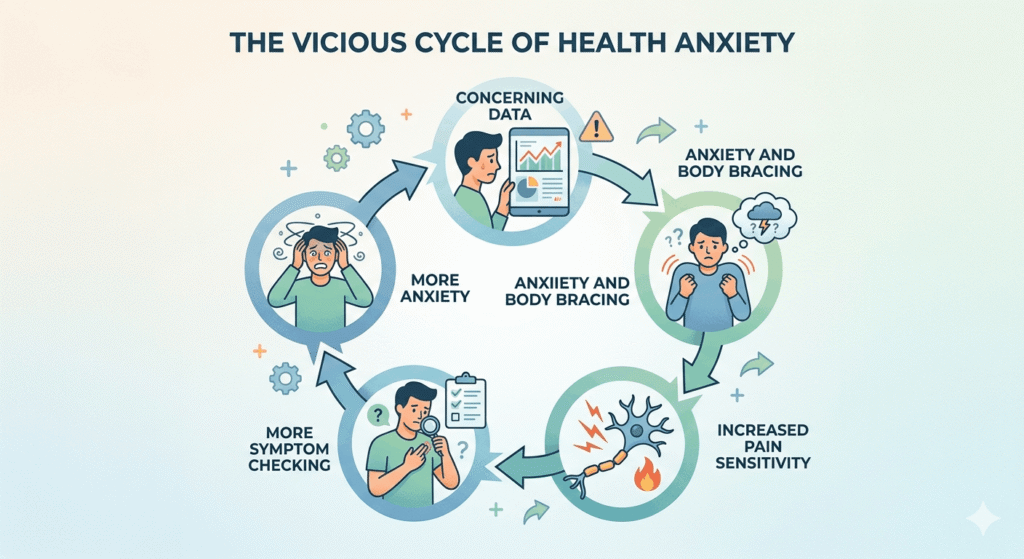
For people with persistent pain, this kind of hypervigilance can feed into Central Sensitization, where the nervous system becomes more reactive and discomfort can feel amplified.
The irony? A device meant to support wellness may sometimes increase stress around symptoms.
4 Ways Smartwatch Stress Can Increase Pain
1. The “10,000 Steps” Pressure
Standard movement goals weren’t designed for people managing flare-ups or fatigue.
Trying to force a generic step goal on low-energy days can lead to overexertion and trigger the classic boom-and-bust cycle—doing too much on a good day and paying for it later.
With chronic pain, pacing often matters more than pushing.
2. Constant Monitoring Can Fuel Health Anxiety
Repeatedly checking heart rate, sleep scores, or stress metrics can keep your nervous system in a low-level threat state.
And a chronically stressed nervous system is rarely helpful for pain recovery.
Sometimes more data creates more vigilance—not more control.
3. Wearable Data Can Be Misleading Without Context
A low HRV score or poor recovery score doesn’t automatically mean something is wrong.
Metrics shift for lots of normal reasons:
- Stress
- Sleep changes
- Activity load
- Hormonal changes
- Everyday nervous system demands
Without context, numbers can feel threatening when they may simply be information.
4. Tracking Can Encourage Overdoing It
Activity rings and streaks can push people to keep going when their body may need recovery.
That can turn movement into pressure.
Recovery often improves through consistency, pacing, and respecting your energy budget—not chasing numbers.
How to Make Your Smartwatch Work for You
Your smartwatch should support your recovery—not add pressure.
Focus on trends, not daily scores
One bad sleep score or low readiness day doesn’t define how you’ll feel. Look at patterns over time instead of reacting to one data point.
Let your body guide your goals.
Rather than chasing fixed targets like 10,000 steps, adjust movement based on your energy and symptoms. Pacing often supports recovery better than pushing through.
Use calming features when symptoms spike.
Breathing and mindfulness tools on your watch can be useful during stress or pain flare-ups. Sometimes regulation is more valuable than more tracking.
Use data as information, not a warning.
A low HRV or missed goal isn’t failure—it’s feedback. Let the data guide choices, not create fear.
Bring your data to physiotherapy.
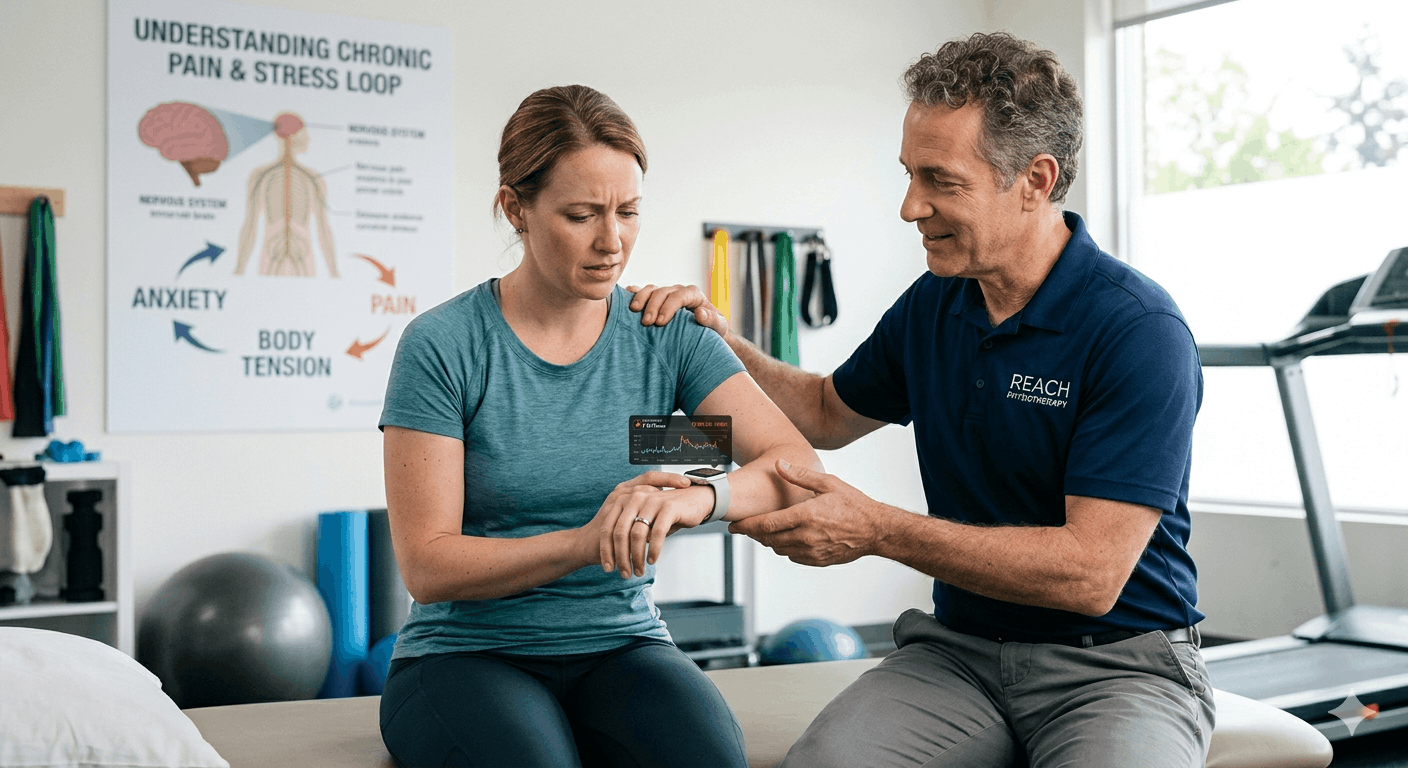
Wearable data can be far more helpful when viewed alongside your symptoms, function, and recovery goals with professional physiotherapist guidance.
The goal isn’t to stop using technology—it’s to use it in a way that builds confidence, not stress.
Generic Tracking vs Physio-Guided Tracking
| Feature | Generic Tracking | Physio-Guided Tracking |
|---|---|---|
| Daily Goal | Static (10k steps) | Dynamic, based on energy budget |
| Response to Low Scores | Fear or guilt | Strategic rest or gentle mobility |
| Focus | Hitting numbers | Building nervous system resilience |
| Activity Pattern | Boom-and-bust | Sustainable pacing |
| Purpose of Data | Performance pressure | Recovery support |
The Goal Isn’t Perfect Data - It’s Less Smartwatch Stress
- Your watch should support recovery, not dictate how you feel.
- A low readiness score is data—not destiny.
- The goal isn’t perfect metrics.
- It’s building confidence in your body again.
Reducing smartwatch stress often means using technology with more flexibility, less pressure, and more trust in your body’s signals.
Ready to Turn Your Data Into a Recovery Tool?
If your smartwatch feels more stressful than supportive, it may be time to change how you use the data.
At Millwoods Physical Therapy Centre, we help people with chronic pain use movement, pacing, nervous system strategies—and even wearable tech—to support recovery, reduce flare-ups, and rebuild trust in their bodies.
Book a consultation today to create a recovery plan that works for your body—not just your battery life.